
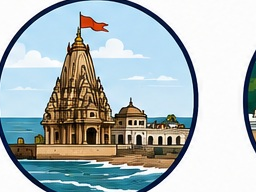
Dwarka
See what's happening
Browse topics · 32
Dwarka
Basic informationOpen ↗
| Attribute | Details | | :--- | :--- | | Official Name | Dwarka | | Common Name | Dwarka | | Native Name(s) | દ્વારકા (Gujarati), द्वारका (Hindi) | | Nicknames | City of Lord Krishna, The Golden City | | Motto | _Data not readily available for this location._ | | Geographic Level | City (Municipality) | | Country | India | | State/Province | Gujarat | | Capital | Gandhinagar (State Capital) | | Government Type | Municipality (Nagar Palika) | | Date Founded | Ancient (Historical) | | Time Zone | IST (UTC+05:30) | | Latitude | 22.2442° N | | Longitude | 68.9685° E | | Elevation | 0 meters (Sea level) | | Total Area | _Data not readily available for this location._ | | Population | 38,873 (2011 Census) | | Population Density | _Data not readily available for this location._ | | ZIP/Postal Codes | 361335 | | Area Codes | +91 2892 | | Official Languages | Gujarati, Hindi | | Currency | Indian Rupee (INR) | | Demonym | Dwarkawasi (informal) |
OverviewOpen ↗
Dwarka is an ancient, highly revered city situated on the western tip of the Saurashtra peninsula in the Indian state of Gujarat. Positioned where the Gomti River meets the Arabian Sea, it holds an extraordinary place in India's cultural and spiritual landscape. It is most famous for being the legendary capital of Lord Krishna and is designated as both one of the *Char Dham* (four principal holy pilgrimage sites) and one of the *Sapta Puri* (seven sacred cities) in Hinduism.
Beyond its profound mythological and religious significance, Dwarka is a city of historical intrigue and marine archaeology. Extensive underwater excavations off its coast have revealed sunken ruins, lending fascinating physical context to ancient texts that describe a magnificent city swallowed by the sea. Today, Dwarka is a bustling pilgrimage hub anchored by the towering, intricately carved Dwarkadhish Temple, welcoming hundreds of thousands of visitors seeking spiritual solace, historical wonder, and the warm hospitality of coastal Gujarat.
HistoryOpen ↗
The history of Dwarka is deeply intertwined with Hindu mythology, particularly the epic Mahabharata and the Puranas. According to legend, Lord Krishna founded the city of Dwarka (meaning "Gateway to Heaven") after fleeing Mathura to escape the continuous attacks of Jarasandha. It is said that this prosperous, golden city was built by the divine architect Vishwakarma. Upon Krishna's departure from the mortal world, the original city was supposedly submerged by the Arabian Sea.
Modern marine archaeology has added a compelling layer to these legends. Since the 1980s, excavations conducted by the National Institute of Oceanography (NIO) under the guidance of archaeologists like Dr. S.R. Rao have discovered submerged stone structures, anchors, and artifacts off the coast of modern Dwarka and nearby Bet Dwarka. While the exact dating is debated, these findings confirm the existence of ancient port settlements that were inundated by rising sea levels in antiquity.
In recorded history, the current Dwarkadhish Temple (Jagat Mandir) was originally believed to have been established over 2,500 years ago by Vajranabha, Krishna's great-grandson, though the present five-story structure was largely rebuilt in the 15th and 16th centuries. The region saw various rulers, including the Maitrakas, Chalukyas, and the Gaekwads of Baroda. During the medieval period, the temple faced destruction by invaders, including Mahmud Begada in 1473, but was continually rebuilt by devoted patrons. Following India's independence in 1947, Dwarka became part of the Saurashtra state, eventually integrating into Gujarat when the state was formed in 1960.
GeographyOpen ↗
Dwarka is located in the Devbhumi Dwarka district on the western coast of the Saurashtra peninsula in Gujarat. The city sits on the right bank of the Gomti River at its confluence with the Arabian Sea. The geographic position places it on the extreme western frontier of India, overlooking the expansive Gulf of Kutch to the north and the open Arabian Sea to the west.
The physical geography is defined by a coastal environment characterized by sandy beaches, limestone cliffs, and shallow offshore waters dotted with coral reefs in the wider Gulf of Kutch region. The inland areas surrounding the city are largely flat, consisting of semi-arid coastal plains with sparse natural vegetation, primarily adapted to the saline and dry conditions.
TopographyOpen ↗
The topography of Dwarka is predominantly flat, typical of a coastal plain, with an average elevation of nearly zero meters at the shoreline, gently rising a few meters inland. There are no major hills, mountains, or valleys within the immediate city limits.
The coastal area features a mix of sandy stretches, most notably near the Gomti Sangam (confluence), and rocky outcrops. The region is highly influenced by tidal action, with tidal flats and small estuaries shaping the immediate coastline. A few kilometers away lies the Shivrajpur Beach, known for its gentle, sandy topography and Blue Flag certification. Across a short stretch of the Gulf of Kutch lies Bet Dwarka, a small island featuring minor elevations and a rugged coastline.
Weather & climateOpen ↗
Dwarka experiences a hot semi-arid climate (Köppen climate classification *BSh*). The weather is highly influenced by its coastal location, which provides a slight moderating effect compared to the extreme heat of inland Gujarat, though it remains generally hot and dry for most of the year.
Summers (March to June) are hot and humid, with average maximum temperatures ranging from 30°C to 35°C (86°F to 95°F), sometimes spiking higher. The monsoon season lasts from July to September, bringing moderate but irregular rainfall, averaging around 300-400 mm annually. Winters (November to February) are mild and pleasant, with daytime temperatures hovering around 25°C to 28°C (77°F to 82°F) and cooler nights. The best time to visit is during the winter months. Because it is situated on the Arabian Sea, Dwarka is occasionally vulnerable to tropical cyclones; for instance, Cyclone Biparjoy significantly impacted the region in 2023.
PopulationOpen ↗
According to the 2011 Census of India, the municipality of Dwarka had a population of 38,873. The male population constituted roughly 52% of the total, while females made up 48%. The population has likely seen moderate growth in the decade since, driven by tourism-related economic opportunities.
The demographic is overwhelmingly Hindu, reflecting the city's status as a major pilgrimage center. Gujarati is the primary language spoken by residents, followed closely by Hindi, which is widely understood due to the continuous influx of pilgrims from across India. English is used in administrative, educational, and tourism-related contexts. The literacy rate in Dwarka is relatively high, standing at around 75% as of the last census.
GovernmentOpen ↗
Dwarka is administered by a municipality, known locally as a Nagar Palika, which is responsible for civic infrastructure, sanitation, water supply, and local road maintenance. The Nagar Palika is divided into various wards, with representatives (councilors) elected by the residents.
Administratively, Dwarka is a taluka (sub-district) within the Devbhumi Dwarka district. The district headquarters is located in the nearby town of Khambhalia, where major administrative and judicial functions are centralized. At the state level, Dwarka is represented by a Member of the Legislative Assembly (MLA) in the Gujarat State Legislature, and at the national level, it falls under the Jamnagar Lok Sabha constituency for representation in the Indian Parliament.
EconomyOpen ↗
The economy of Dwarka is deeply tethered to religious tourism and the hospitality sector. As one of the most prominent Hindu pilgrimage sites in India, the city receives millions of visitors annually, which fuels a vast network of hotels, guesthouses, restaurants, transport services, and local vendors.
Beyond tourism, the local economy is supported by traditional sectors such as fishing, agriculture in the surrounding rural areas, and small-scale retail. The cost of living is generally lower than in major Indian metropolises, though real estate prices in the immediate vicinity of the Dwarkadhish Temple can be high due to commercial demand. Economic growth relies on continuous government investment in pilgrimage infrastructure, road connectivity, and coastal development.
IndustriesOpen ↗
* Tourism & Hospitality: The backbone of Dwarka's economy, encompassing hundreds of hotels, ashrams, eateries, and tour operators catering to year-round pilgrims. * Retail & Handicrafts: A bustling local market selling religious artifacts, brassware, and traditional Gujarati textiles, particularly *Bandhani* (tie-dye) fabrics. * Fishing & Aquaculture: Benefiting from its extensive coastline, the region has an active fishing community supplying local markets and exporting seafood. * Agriculture: In the rural outskirts, farming focuses on drought-resistant crops like groundnut and cotton. * Salt Production: The coastal saline flats of the wider Devbhumi Dwarka district support a notable salt panning and manufacturing industry.
AgricultureOpen ↗
Agricultural activity within the city limits of Dwarka is negligible, but the surrounding taluka and the broader Devbhumi Dwarka district have a robust agricultural sector adapted to the semi-arid climate. The region relies heavily on monsoon rains and irrigation from local dams and groundwater.
Major crops include groundnut (peanuts), cotton, bajra (pearl millet), sesame, and wheat. Livestock rearing, particularly cows and buffaloes, is a crucial secondary source of income, tying into the region's dairy production. Given the high salinity of the coastal soil and water scarcity, organic farming and drip irrigation techniques are increasingly being promoted by the state agricultural departments.
HousingOpen ↗
Housing in Dwarka is a mix of traditional architecture, mid-century concrete constructions, and modern developments geared toward hospitality and temporary residency. In the older parts of the city near the Gomti River and the main temple, housing is dense, featuring narrow lanes and multistory traditional homes, many of which double as guesthouses or commercial spaces on the ground floor.
In recent years, the outskirts of the city have seen the development of newer residential societies, apartments, and modern bungalows. A unique aspect of Dwarka's real estate market is the demand for "second homes" or retirement properties by devotees who wish to live their later years in the holy city. Affordable housing options exist primarily in the suburban fringes, while properties near the sea or the temple command premium prices.
NeighborhoodsOpen ↗
* Dwarkadhish Temple Area: The bustling, dense historic core of the city, filled with pilgrims, sweet shops, vendors, and older residential clusters. * Gomti Ghat Area: Situated along the riverbanks, featuring ancient shrines, stepped ghats for holy dips, and waterfront properties. * Bhadrakali Road: A major commercial and residential artery known for its local markets, shopping, and everyday amenities. * Rukmini Devi Temple Area: Located a couple of kilometers outside the main city center, a quieter, more arid zone featuring the historic temple dedicated to Krishna's consort. * Sunset Point / Bhadkeshwar: A scenic coastal neighborhood with rocky shores, parks, and developing residential and hotel properties offering sea views.
TransportationOpen ↗
Dwarka is well-connected to the rest of Gujarat and India, primarily by road and rail. The Dwarka Railway Station is a major stop on the Western Railway network, with direct trains linking the city to Ahmedabad, Mumbai, Delhi, and other major metropolitan areas.
By road, National Highway 51 (NH51) and state highways connect Dwarka to Jamnagar, Porbandar, and Somnath. The Gujarat State Road Transport Corporation (GSRTC) and numerous private operators run frequent bus services. The city does not have its own airport; the nearest domestic airports are in Porbandar (approx. 100 km) and Jamnagar (approx. 130 km). Within the city, auto-rickshaws (chhakdas) and taxis are the primary modes of public transit, alongside walking, which is highly popular among pilgrims navigating the narrow streets of the temple complex.
InfrastructureOpen ↗
Dwarka is equipped with basic to moderate urban infrastructure managed by the municipality. Electricity is reliably supplied by the Paschim Gujarat Vij Company Limited (PGVCL). Water supply is a critical focus due to the region's aridity; it is sourced from local reservoirs and augmented by the Narmada canal pipeline grid to ensure consistent supply, especially during peak tourist seasons.
Telecommunications infrastructure is robust, with widespread 4G and emerging 5G coverage provided by major national carriers like Jio, Airtel, and BSNL. Broadband internet is available through local and national ISPs. Sewerage and solid waste management systems are continually being upgraded to handle the massive influx of floating population during major festivals like Janmashtami.
EducationOpen ↗
* Shardapeeth Arts, Commerce & College of Education: A prominent local institution for higher education, affiliated with Saurashtra University, offering degrees in arts and commerce. * Shree Dwarkadhish Sanskrit Academy & Indological Research Institute: Established to promote Vedic studies, Sanskrit literature, and research into India's ancient texts. * NDH High School: One of the oldest and most prominent secondary schools serving the local community. * St. Ann's High School: A well-regarded private English-medium school providing primary and secondary education. * Kendriya Vidyalaya (Nearby): Located in neighboring coastal areas serving central government and defense employees, providing standardized national curriculum education.
HealthcareOpen ↗
Healthcare in Dwarka is primarily oriented toward serving the local population and the large influx of pilgrims and tourists. While the city has essential medical infrastructure, highly specialized care often requires travel to larger nearby cities like Jamnagar or Rajkot.
* Government Facilities: The Government Civil Hospital in Dwarka serves as the primary public healthcare provider, offering emergency services, general medicine, and maternal care. * Private Clinics and Hospitals: Several private clinics, nursing homes, and small hospitals operate within the city, catering to general ailments, orthopedics, and pediatric care. * Pharmacies: Medical stores and pharmacies are widely available, particularly clustered near the main market and hospital areas. * Urgent Care: Handled mostly through the emergency department of the Civil Hospital and select 24-hour private facilities.
Emergency servicesOpen ↗
Emergency services in Dwarka are managed by the local municipality and the Gujarat state government. Because Dwarka is located on the Saurashtra coast, disaster management—particularly cyclone preparedness—is a highly active component of local emergency services.
Key Emergency Numbers: * National Emergency Number: 112 * Police: 100 * Fire Brigade: 101 * Ambulance: 108 (GVK EMRI service, widely used across Gujarat)
The local police station is situated near the city center to maintain law and order, especially during major festivals when crowd control is crucial. The Coast Guard and local marine police also play an active role in coastal security and search-and-rescue operations.
BusinessesOpen ↗
Dwarka's economy is predominantly driven by religious tourism, hospitality, and local commerce.
* Tourism and Hospitality: The most significant source of employment and business is the hospitality sector. The city features hundreds of hotels, guesthouses, dharamshalas, and tour operating agencies. * Retail and Handicrafts: The local bazaars (markets) thrive on selling religious artifacts, brassware, and traditional Gujarati textiles, particularly *Bandhani* (tie-dye) fabrics, embroidered garments, and handcrafted jewelry. * Agriculture and Fishing: The surrounding Devbhumi Dwarka district is agricultural, with crops like groundnut, cotton, and cumin. Fishing is also a primary occupation in the nearby coastal villages. * Major Industrial Presence: While Dwarka itself is largely a pilgrimage town, the nearby town of Mithapur (approx. 20 km away) is home to a massive Tata Chemicals plant, which is one of the largest employers in the region.
Restaurants & foodOpen ↗
The culinary landscape in Dwarka is deeply influenced by its status as a holy city. Vegetarianism is strictly observed, and Gujarat is famously a dry state (alcohol is prohibited).
* Local Cuisine: Traditional Gujarati cuisine dominates. The standard offering is the *Gujarati Thali*, a platter featuring roti, dal, kadhi, various vegetable preparations (shaak), rice, and sweets. * Street Food: Snacks like *khaman*, *dhokla*, *fafda*, *jalebi*, *khandvi*, and *bhajiya* are ubiquitous, particularly in the bustling lanes leading up to the main temples. * Dairy: Dairy products are widely consumed, with buttermilk (*chaas*), lassi, and local sweets like *peda* and *basundi* being highly popular. * Temple Prasad: Food offered to the deities at the Dwarkadhish Temple (Maha Prasad) is highly sought after by visitors and is a central part of the local food culture.
TourismOpen ↗
Tourism in Dwarka is almost entirely centered on its ancient heritage and profound religious significance in Hinduism. It is one of the *Char Dham* (four principal pilgrimage sites) and one of the *Sapta Puri* (seven holy cities).
* Dwarkadhish Temple (Jagat Mandir): The heart of the city. A magnificent, intricately carved limestone temple dedicated to Lord Krishna, believed to have been originally built by Krishna's great-grandson, Vajranabha. * Rukmini Devi Temple: Dedicated to Lord Krishna's chief queen, located a short distance from the main city, notable for its 12th-century architecture. * Bet Dwarka: An island off the coast of Okha, accessible by ferry. It is believed to be the original residence of Lord Krishna. * Nageshwar Jyotirlinga: Located on the route to Bet Dwarka, it is one of the 12 sacred Jyotirlingas dedicated to Lord Shiva. * Sudama Setu: A pedestrian suspension bridge over the Gomti River offering panoramic views of the river, the sea, and the Dwarkadhish Temple. * Bhadkeshwar Mahadev Temple: Situated on a hillock in the Arabian Sea, offering excellent sunset views. * Dwarka Lighthouse: Provides sweeping views of the coastline and the city.
RecreationOpen ↗
Recreation in Dwarka blends spiritual calm with coastal activities.
* Beaches: The coastline offers peaceful retreats. Shivrajpur Beach, located about 12 km from Dwarka, is a major recreational hub. It boasts a prestigious "Blue Flag" certification for its cleanliness and safety. * Water Sports and Scuba Diving: Shivrajpur Beach and nearby coastal areas have begun offering water sports, parasailing, and scuba diving. Scuba diving off the coast of Dwarka is uniquely popular for exploring the underwater marine life and, allegedly, the submerged ruins of the ancient city. * Boating: Taking a boat ride on the Gomti River or a ferry from Okha to Bet Dwarka are popular recreational activities for families. * Walking: Strolling along the Gomti Ghats, especially during the evening aarti (prayer), is a serene recreational pastime.
Parks & natureOpen ↗
While the immediate city is densely built around its temples, the surrounding region offers notable natural beauty.
* Shivrajpur Beach: A Blue Flag certified beach renowned for its pristine white sands, clear waters, and dolphin sightings. * Charkhala Bird Sanctuary: Located near Mithapur, this sanctuary is a haven for bird watchers. During the winter, it attracts thousands of migratory birds, including flamingos, pelicans, painted storks, and spoonbills. * Marine National Park, Gulf of Kutch: Though closer to Jamnagar, the coastal ecology extending toward Dwarka is part of a rich marine biodiversity zone featuring coral reefs, mangroves, and diverse marine life.
Rivers, lakes & waterwaysOpen ↗
Water is integral to both the geography and the spiritual identity of Dwarka.
* Arabian Sea: Dwarka sits right on the coast of the Arabian Sea, giving the city its maritime climate and historical significance as an ancient port. * Gomti River: The Gomti River meets the Arabian Sea at Dwarka. The river's banks are lined with historic ghats (steps leading to the water) where pilgrims take a holy dip before entering the main temple. * Gulf of Kutch: The waters extending north of the Dwarka peninsula into the Gulf of Kutch dictate the marine environment and port activities in nearby Okha.
Arts & cultureOpen ↗
Dwarka's culture is steeped in devotion to Lord Krishna, known locally as *Dwarkadhish* (King of Dwarka).
* Music and Dance: *Bhajans* (devotional songs) and *Kirtans* echo through the city daily. During festivals, traditional Gujarati folk dances like *Garba* and *Raas*—which mythological tradition says originated with Lord Krishna and the Gopis—are performed enthusiastically. * Crafts: The region is famous for its intricate beadwork, mirror work, and embroidery. Artisan communities in and around Dwarka produce stunning traditional garments and home decor. * Textiles: The local markets are a hub for *Bandhani* (traditional Indian tie and dye), which is a quintessential part of Saurashtra's cultural heritage. * Mythology and Heritage: The oral traditions, folklore, and daily rituals of the city continuously reenact stories from the *Mahabharata* and the *Puranas*.
ReligionOpen ↗
Dwarka is one of the most sacred cities in Hinduism.
* Religious Composition: The population is overwhelmingly Hindu, reflecting the city's status as a major pilgrimage center. There are also smaller communities of Muslims and Jains. * Significance: It is one of the *Char Dham* (the four cardinal pilgrimage sites of India, alongside Badrinath, Puri, and Rameswaram) and one of the *Sapta Puri* (the seven sacred cities capable of bestowing liberation). * Key Institutions: * Dwarka Sharda Peeth: One of the four cardinal *mathas* (monasteries) established by the 8th-century philosopher Adi Shankara. * ISKCON Dwarka: The International Society for Krishna Consciousness maintains a presence here, catering to international and local devotees.
SportsOpen ↗
Formal sports infrastructure in Dwarka is relatively limited, as the city is primarily oriented toward pilgrimage.
* Cricket: As in the rest of India, cricket is the most popular amateur sport, played in local maidans (grounds) and streets. * Adventure Sports: The coastal waters around Dwarka and Shivrajpur Beach are emerging as a hub for adventure sports, notably scuba diving, snorkeling, and parasailing. * Traditional Sports: Kite flying becomes highly competitive and widespread during the Makar Sankranti festival.
EventsOpen ↗
Events in Dwarka are synonymous with the Hindu religious calendar.
* Janmashtami: The birthday of Lord Krishna is the most significant event in Dwarka. Hundreds of thousands of pilgrims visit the city. The celebrations include midnight prayers, vibrant processions, and cultural performances. * Annakut / Diwali: Following Diwali, a massive feast (*Annakut*) is offered to the deity at the Dwarkadhish Temple, marking the Gujarati New Year. * Holi and Phool Dol: The festival of colors is celebrated with great fervor in the temple premises, often utilizing flowers and colored powder. * Makar Sankranti (Uttarayan): The kite-flying festival in January is celebrated with enthusiasm across the city's rooftops. * Navratri: The nine nights dedicated to the Goddess are celebrated with community *Garba* dances.
MediaOpen ↗
Residents of Dwarka consume media typical of the broader Gujarat state.
* Newspapers: Major Gujarati dailies such as *Gujarat Samachar*, *Sandesh*, *Divya Bhaskar*, and *Akila* are widely read. National English dailies are also available. * Television: State-run Doordarshan (DD Girnar) and private Gujarati news channels (e.g., TV9 Gujarati, ABP Asmita, Sandesh News) are heavily watched via local cable and satellite providers. * Radio: All India Radio (AIR) and a few private FM channels broadcast in the region, providing news, devotional music, and entertainment.
Prominent personalitiesOpen ↗
* Lord Krishna: The legendary 8th Avatar of Vishnu and mythological king of ancient Dwarka; the city's entire identity, history, and economy are centered around his life and legacy. * Shikaripura Ranganatha Rao (S. R. Rao): A renowned Indian archaeologist who led the pioneering marine archaeological excavations off the coast of Dwarka, bringing global attention to the submerged ruins. * Adi Shankara: The 8th-century Vedic scholar and teacher who visited Dwarka and established the Sharda Peeth, cementing the city's status in modern Hinduism. * Pabubha Manek: A notable local politician and long-serving Member of the Legislative Assembly (MLA) for the Dwarka constituency.
Notable companiesOpen ↗
While Dwarka itself is not a corporate hub, it relies on local hospitality chains and nearby heavy industry.
* Tata Chemicals Limited: Located in neighboring Mithapur (approx. 20 km away), this massive facility produces soda ash, marine chemicals, and Tata Salt. It is the most significant industrial employer in the immediate region. * Hospitality Groups: Several regional and national hospitality chains operate major properties in Dwarka to cater to pilgrims, including Hawthorn Suites by Wyndham, Mercure, Lords Eco Inn, and Fern Residency. * GHCL (Gujarat Heavy Chemicals Ltd): Operates facilities in the broader Saurashtra coastal region, contributing to the local industrial economy.
Sister citiesOpen ↗
_Data not readily available for this location._
From Dwarka →
Popular neighbouring-country destinations frequently paired with Dwarka.
Local news
via Google News · refreshed hourly- The Lost City of Dwarka Makes Its Gujarat Debut at Palladium Ahmedabad - Ahmedabad MirrorAhmedabad Mirror· Oct 31, 2026The Lost City of Dwarka Makes Its Gujarat Debut at Palladium Ahmedabad Ahmedabad Mirror
- Dwarka Basin - Drishti IASDrishti IAS· Mar 27, 2026Dwarka Basin Drishti IAS
- ASI's UAW team begins underwater exploration in Gujarat's Dwarka - ANI NewsANI News· Nov 26, 2025ASI's UAW team begins underwater exploration in Gujarat's Dwarka ANI News
- Devbhoomi Dwarka, Gujarat | Devbhoomi Dwarka Map, Pros & Cons, Photos, Reviews and Property Insights - HousingHousing· Mar 10, 2026Devbhoomi Dwarka, Gujarat | Devbhoomi Dwarka Map, Pros & Cons, Photos, Reviews and Property Insights Housing
- Dwarka: India's submerged ancient city - BBCBBC· Jan 14, 2022Dwarka: India's submerged ancient city BBC
- World's Tallest Krishna Statue To Come Up In Gujarat's Dwarka As Part Of Devbhumi Corridor - NDTVNDTV· Dec 22, 2022World's Tallest Krishna Statue To Come Up In Gujarat's Dwarka As Part Of Devbhumi Corridor NDTV
- ROHL launches Regent hotel in Dwarka, Gujarat - ET HospitalityWorldET HospitalityWorld· Jan 12, 2025ROHL launches Regent hotel in Dwarka, Gujarat ET HospitalityWorld
- PM inaugurates Sudarshan Setu connecting Okha mainland and Beyt Dwarka island in Gujarat - PM IndiaPM India· Feb 25, 2024PM inaugurates Sudarshan Setu connecting Okha mainland and Beyt Dwarka island in Gujarat PM India