
Jaipur
See what's happening
Browse topics · 32
Jaipur
Basic informationOpen ↗
| Attribute | Details | | :--- | :--- | | Official Name | Jaipur | | Common Name | Jaipur | | Native Name(s) | जयपुर | | Nicknames | The Pink City, Paris of India | | Motto | _Data not readily available for this location._ | | Geographic Level | District / City | | Country | India | | State/Province | Rajasthan | | Capital | Jaipur (State Capital) | | Government Type | Municipal Corporation (City) / District Administration | | Date Founded | 1727 | | Time Zone | Indian Standard Time (IST) (UTC+05:30) | | Latitude | 26.9124° N | | Longitude | 75.7873° E | | Elevation | 431 m (1,414 ft) | | Total Area | 11,143 sq km (Traditional District) / 467 sq km (City) | | Population | ~3.1 million (City, 2011), ~6.6 million (District, 2011) | | Population Density | ~595/sq km (District) | | ZIP/Postal Codes | 302001 - 302033 | | Area Codes | +91 141 | | Official Languages | Hindi (Rajasthani, Dhundhari also widely spoken) | | Currency | Indian Rupee (INR) | | Demonym | Jaipurite |
OverviewOpen ↗
Jaipur, the vibrant capital of India's desert state of Rajasthan, stands as a stunning testament to India's regal past and its dynamic present. Universally cherished as the "Pink City" for its uniformly terracotta-pink historical architecture, the city is a living museum of Rajput valor, ingenious urban planning, and enduring cultural heritage. Together with Delhi and Agra, Jaipur forms the western anchor of the Golden Triangle, one of the world's most renowned and heavily traversed tourist circuits.
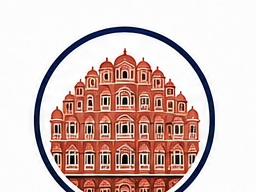
The city is celebrated not only for its monumental forts and palaces—such as the majestic Amer Fort and the intricate Hawa Mahal—but also for its profound contributions to the arts, sciences, and global trade. It is a UNESCO World Heritage site, honored both for its 18th-century walled city and for the Jantar Mantar, an astonishing collection of oversized astronomical instruments built by its scholarly founder.
Beyond its historic charm, modern Jaipur is a bustling metropolis. It serves as a major hub for global gemstone cutting, traditional block-print textiles, and increasingly, information technology and higher education. Warm, chaotic, and relentlessly colorful, Jaipur offers a generous embrace to anyone seeking to experience the synthesis of India's ancient traditions and rapid modern development.
HistoryOpen ↗
Jaipur was founded on November 18, 1727, by Maharaja Sawai Jai Singh II, a visionary Rajput ruler who shifted his capital from the nearby rugged hills of Amer to the open plains due to population growth and water scarcity. Unlike the organically grown cities of the era, Jaipur was meticulously planned. Jai Singh consulted Vidyadhar Bhattacharya, a Bengali scholar who designed the city's grid based on the principles of Vastu Shastra and Shilpa Shastra, ancient Indian architectural treatises. It was India's first planned city, featuring wide avenues, standardized shopfronts, and distinct sectors for different trades.
The city's iconic pink hue was introduced later, in 1876, under the rule of Sawai Ram Singh II. In anticipation of a visit by Albert Edward, the Prince of Wales (later King Edward VII), the Maharaja ordered the entire walled city to be painted a terracotta pink—a color traditionally associated with hospitality. The color mandate remains strictly enforced by local laws within the historic center to this day, preserving the city's unique aesthetic.
During the British Raj, Jaipur was the capital of the princely state of Jaipur, which maintained a treaty of alliance with the British Crown while retaining internal autonomy. The state saw significant modernization in the late 19th and early 20th centuries, including the introduction of railways, modern medicine, and higher education.
Following India's independence in 1947, the princely state of Jaipur merged with the newly formed Union of India in 1949. Jaipur was chosen as the capital of the newly formed state of Rajasthan. In the decades since, the city has evolved from a royal capital into an economic and cultural powerhouse, absorbing waves of rural migration while preserving the traditional crafts and heritage that drive its global identity.
GeographyOpen ↗
Located in the eastern part of Rajasthan, the Jaipur district sits at the edge of the Thar Desert, though it possesses a distinctly semi-arid landscape rather than true desert. The city itself is uniquely cradled by the rugged Aravalli Hills on three sides—north, east, and west—which historically provided natural fortifications against invading armies.
The region's geography is characterized by dry, sandy plains interspersed with rocky outcrops and scrub forests. The main rivers flowing through the district include the Banganga and the Dhund, though these are largely seasonal and depend heavily on the summer monsoon. Natural resources in the region are abundant in building materials and minerals, including sandstone, marble, copper, and iron, which have driven local architecture and industry for centuries.
TopographyOpen ↗
Jaipur sits at an average elevation of 431 meters (1,414 feet) above sea level in a basin largely sheltered by the Aravalli Range. The central urban core is relatively flat, making it ideal for the grid-like street planning employed by its founders. However, the topography becomes highly uneven and rocky as one moves toward the city limits.
The surrounding Aravalli hills, which are among the oldest fold mountains in the world, dictate the physical boundaries of historic Jaipur. Prominent peaks in the immediate vicinity are crowned with magnificent fortifications—most notably the Nahargarh Fort and Jaigarh Fort, which sit atop the ridges looking down into the city and the neighboring valley of Amer. The lowest points in the region form shallow seasonal lakes, such as Jal Mahal's Man Sagar Lake, which collects runoff from the surrounding catchment areas.
Weather & climateOpen ↗
Jaipur experiences a hot semi-arid climate (Köppen climate classification *BSh*). The year is heavily dominated by an intensely hot summer, a brief but vital monsoon season, and a pleasant, mild winter. Summer, running from April to early July, features extreme heat, with average daily highs frequently exceeding 40°C (104°F) and hot, dry winds known as the *loo* sweeping through the plains.
The monsoon arrives by late June or early July and lasts until September, bringing moderate but crucial rainfall (averaging about 600 mm annually) and high humidity, which paints the surrounding Aravalli hills a lush, vibrant green. The best time to visit is during the winter months, from late October to March. During this period, the weather is clear, sunny, and highly comfortable, with daytime temperatures hovering around 20-25°C (68-77°F), though nights in January can occasionally dip to 5°C (41°F).
PopulationOpen ↗
Jaipur is the largest city in Rajasthan and the tenth most populous city in India. The 2011 census recorded the urban agglomeration at just over 3.1 million residents, with the broader district housing roughly 6.6 million. Current estimates suggest the metropolitan population is nearing 4 million due to steady rural-to-urban migration and industrial growth. The population is relatively young, aligning with India's broader demographic dividend.
The city represents a diverse cultural mosaic. Hinduism is the majority religion, followed by a substantial Muslim community (particularly concentrated in historic areas like Ramganj), as well as significant Jain, Sikh, and Christian populations. Hindi and Rajasthani (specifically the local Dhundhari dialect) are the most commonly spoken languages, while English is widely used in business, education, and the tourism sector. The city has a strong tradition of generational craftsmanship, with entire communities dedicated to specific trades like jewelry, pottery, and textiles.
GovernmentOpen ↗
Administratively, Jaipur operates under a dual framework serving both the city and the broader district. Due to its massive population, the city's civic administration was recently divided into two distinct municipal bodies: the Jaipur Greater Municipal Corporation and the Jaipur Heritage Municipal Corporation. These bodies are managed by elected mayors and oversee local public services, sanitation, and urban planning.
At the district level, the administration is headed by the District Magistrate (or Collector), an IAS officer appointed by the state government, responsible for law and order, land revenue, and overarching district governance. Furthermore, as the capital of Rajasthan, Jaipur is the seat of the state government. The Rajasthan Legislative Assembly (Vidhan Sabha) and the state secretariat are located here, making it the political nerve center of the region.
EconomyOpen ↗
Jaipur's economy is a fascinating blend of ancient heritage trades and cutting-edge modern industries. While no definitive standalone GDP figure is published for the city alone, it is a primary economic driver for Rajasthan. Historically a center for trade and commerce, Jaipur has evolved into a diversified economy characterized by manufacturing, tourism, specialized crafts, and a rapidly expanding services sector.
The cost of living in Jaipur is generally lower than in tier-1 Indian cities like Mumbai or Delhi, making it an attractive destination for IT companies and startups looking to establish operations. The establishment of Special Economic Zones (SEZs), such as the Mahindra World City, has successfully attracted major multinational corporations, boosting employment in IT/ITES, engineering, and automotive parts manufacturing. The city's economic future is heavily tied to sustainable urban expansion and capitalizing on its strong tourism and export fundamentals.
IndustriesOpen ↗
* Tourism & Hospitality: A massive economic engine, drawing millions of domestic and international visitors to its heritage hotels, forts, and cultural festivals. * Gemstones & Jewelry: Jaipur is a global hub for the cutting and polishing of precious and semi-precious stones, as well as the manufacturing of Kundan and Meenakari jewelry. * Textiles & Handicrafts: Renowned globally for block printing (Bagru and Sanganer styles), bandhani (tie-dye), blue pottery, and handcrafted furniture. * Information Technology (IT/ITES): Growing rapidly with tech parks and SEZs hosting companies like Infosys, Wipro, and Genpact. * Automotive & Manufacturing: Production of ball bearings, auto components, and engineering goods, driven by the presence of industrial areas like Sitapura and Vishwakarma. * Education: A burgeoning educational hub attracting students from across northern and western India for higher studies.
AgricultureOpen ↗
While the urban center is highly developed, the rural expanses of the Jaipur district remain deeply connected to agriculture. Farming here is adapted to the semi-arid climate, relying heavily on the seasonal monsoon and groundwater irrigation. The region features two main crop seasons: Kharif (monsoon crops) and Rabi (winter crops).
Major agricultural outputs include bajra (pearl millet), jowar (sorghum), maize, and groundnuts during the Kharif season. In the cooler Rabi season, farmers cultivate wheat, barley, gram (chickpeas), and mustard, which is a major cash crop for the state. Animal husbandry, particularly the rearing of cows, buffaloes, sheep, and goats, is integral to the rural economy, providing vital supplementary income through dairy and wool production.
HousingOpen ↗
Jaipur's housing market offers a stark contrast between the old and the new. Within the walled Pink City, housing consists largely of historic havelis (courtyard homes) and densely packed multi-story structures characterized by narrow lanes and traditional architecture. In contrast, the areas outside the old city reflect rapid modern urbanization.
The real estate sector has seen exponential growth in recent decades. The southern and western corridors (such as Jagatpura, Mansarovar, and Vaishali Nagar) are dominated by modern apartment complexes, gated communities, and independent villas. Prices vary widely; upscale neighborhoods command premium rates comparable to metropolitan suburbs, while the state government and urban development authorities (JDA) actively promote affordable housing schemes on the city's periphery to accommodate the growing working-class population.
NeighborhoodsOpen ↗
* The Walled City (Pink City): The historic heart of Jaipur, featuring iconic monuments, bustling bazaars (Johari Bazaar, Bapu Bazaar), and traditional pink architecture. * C-Scheme & Civil Lines: The most upscale and affluent residential and commercial areas, housing government officials, premium cafes, and luxury boutiques. * Mansarovar: Once claimed to be Asia's largest residential colony, it is a massive, bustling neighborhood with a mix of residential formats, schools, and markets. * Malviya Nagar: A prominent commercial and residential hub in South Jaipur, known for shopping malls (like World Trade Park), hospitals, and corporate offices. * Vaishali Nagar: A well-planned, affluent western suburb known for its wide roads, popular eateries, and modern residential developments. * Jagatpura: A rapidly developing neighborhood near the airport, popular with students and IT professionals due to its proximity to universities and the IT corridor.
TransportationOpen ↗
Jaipur benefits from excellent connectivity, making it a critical logistical node in North India. The city is served by the Jaipur International Airport (JAI), located in Sanganer, which operates extensive domestic flights and select international routes. Railway connectivity is robust; Jaipur Junction is the headquarters of the North Western Railway zone, linking the city to all major Indian metropolises via express and premium trains like the Vande Bharat and Shatabdi.
Intra-city transportation is anchored by the Jaipur Metro, a rapid transit system that is steadily expanding to connect key residential and commercial zones. The road network includes major arterial highways, most notably National Highway 48, which connects Delhi to Mumbai via Jaipur. Within the city, public transport relies heavily on a fleet of low-floor AC and non-AC buses operated by JCTSL, alongside ubiquitous auto-rickshaws, e-rickshaws, and modern rideshare services (Uber and Ola).
InfrastructureOpen ↗
The civic infrastructure of Jaipur is modernizing rapidly under initiatives like the national Smart Cities Mission. Electricity is distributed by the Jaipur Vidyut Vitran Nigam Limited (JVVNL), with power generation sourced from state and national grids, increasingly supplemented by solar energy—a natural fit for Rajasthan's sunny climate.
Water supply has historically been a challenge due to the semi-arid environment, but the city relies on the Bisalpur Dam project, which pipes drinking water from the Banas River roughly 120 kilometers away, alongside extensive groundwater extraction. Telecommunications infrastructure is highly developed, with widespread 4G/5G cellular coverage and high-speed broadband provided by major national carriers (Jio, Airtel, BSNL). Solid waste management and sewage networks are currently undergoing massive upgrades to keep pace with the city's expanding footprint.
EducationOpen ↗
* University of Rajasthan: Established in 1947, it is the oldest and one of the most prestigious public state universities in Rajasthan. * Malaviya National Institute of Technology (MNIT): A premier, federally funded engineering and research institution. * Sawai Man Singh (SMS) Medical College: A historic and highly ranked medical college and hospital established in 1947. * Manipal University Jaipur: A highly regarded private university known for its modern campus and diverse undergraduate and postgraduate programs. * IIS (Deemed to be University): A prominent institution focusing on higher education for women. * Sawai Mansingh Vidyalaya: One of the city's oldest and most prestigious private high schools. * St. Xavier's Senior Secondary School: A highly respected educational institution known for its strong academic and extracurricular legacy.
HealthcareOpen ↗
Jaipur serves as the primary medical hub for the state of Rajasthan, offering a mix of large public institutions and advanced private healthcare.
- Public Hospitals: Sawai Man Singh (SMS) Hospital is the largest state-run hospital in Rajasthan, providing extensive specialized care.
- Private & Corporate Hospitals: Top-tier tertiary facilities include Fortis Escorts, Narayana Multispeciality Hospital, Mahatma Gandhi Hospital, and Manipal Hospital.
- Specialized Care: Bhagwan Mahaveer Cancer Hospital and Research Center is a leading facility for oncology.
- Pharmacies: A widespread network of 24/7 pharmacies, including Apollo Pharmacy and local dispensaries, serves the city.
Emergency servicesOpen ↗
Emergency services in Jaipur are coordinated by state and municipal authorities, with rapid response teams available across the district.
- National Emergency Number: 112 (integrates police, fire, and medical emergencies)
- Police: 100 (managed by the Jaipur Police Commissionerate)
- Ambulance: 108 (state-run emergency medical response) / 102
- Fire: 101
The State Disaster Response Force (SDRF) Rajasthan coordinates major emergency and disaster management efforts in the region.
BusinessesOpen ↗
Jaipur's economy is a vibrant mix of traditional artisanship and modern service sectors.
- Traditional Industries: The city is a global center for gem cutting, jewelry manufacturing, block-printed textiles (such as Bagru and Sanganer prints), and handicrafts.
- IT & Modern Business: Mahindra World City, a massive Special Economic Zone (SEZ), houses major IT/ITES firms including Infosys, Genpact, and Wipro.
- Automotive & Manufacturing: Industrial areas like Sitapura host major manufacturing units, including JCB and Hero MotoCorp.
- Startups: Jaipur has a growing startup ecosystem, most notably producing homegrown unicorns like the auto-tech giant CarDekho.
Restaurants & foodOpen ↗
Jaipur is a paradise for lovers of robust, flavorful Rajasthani cuisine, known for its rich spices and royal heritage.
- Signature Dishes: Dal Baati Churma, Laal Maas (a fiery mutton curry), Ghewar (a traditional sweet), and Pyaaz ki Kachori.
- Iconic Eateries: Rawat Mishtan Bhandar is legendary for its kachoris, while Laxmi Mishtan Bhandar (LMB) in the walled city is famous for traditional sweets and vegetarian thalis.
- Immersive Dining: Chokhi Dhani offers an immersive Rajasthani village dining and cultural experience.
- Fine Dining: Suvarna Mahal at Rambagh Palace offers a royal dining experience in a palatial setting.
- Street Food & Cafes: Tapri The Tea House is a modern favorite with spectacular city views, while Masala Chowk offers a curated array of local street food.
TourismOpen ↗
As a cornerstone of India's "Golden Triangle" tourist circuit, Jaipur is a global tourism powerhouse affectionately known as the Pink City.
- Forts: Amber (Amer) Fort (a UNESCO World Heritage site), Nahargarh Fort (offering sweeping city views), and Jaigarh Fort form a historic defense ring.
- Palaces: The City Palace (still a royal residence) and the iconic Hawa Mahal (Palace of Winds) are architectural marvels.
- Landmarks: Jantar Mantar is an 18th-century astronomical observatory featuring the world's largest stone sundial (UNESCO World Heritage).
- Museums: The Albert Hall Museum, the oldest museum in the state, houses a rich collection of artifacts, carpets, and an Egyptian mummy.
RecreationOpen ↗
Recreation in Jaipur ranges from heritage exploration to modern leisure activities.
- Shopping: Navigating the walled city's bazaars is a primary recreational activity; Johari Bazaar for jewelry and Bapu Bazaar for textiles and mojari shoes.
- Adventure: Hot air ballooning over the Aravalli hills and early morning cycling tours around Nahargarh Fort are popular.
- Golf: The Rambagh Golf Club offers a lush 18-hole course with a royal backdrop.
- Cinematic Experiences: Watching a Bollywood film at the historic, art-deco Raj Mandir Cinema is a classic Jaipur experience.
Parks & natureOpen ↗
Despite its semi-arid climate, Jaipur is surrounded by the Aravalli hills and contains several notable green spaces and reserves.
- Jhalana Leopard Reserve: An urban safari park famous for high-density leopard sightings right in the heart of the city.
- Nahargarh Biological Park: Located in the Aravalli foothills, this zoological park is home to tigers, lions, panthers, and bears.
- Central Park: The city's largest urban park, featuring a polo ground, lush green spaces, and the tallest monumental national flag in Rajasthan.
- Smriti Van: A tranquil biodiversity forest ideal for morning walks and bird watching.
Rivers, lakes & waterwaysOpen ↗
Water bodies have historically been central to Jaipur's architecture and royal retreats.
- Man Sagar Lake: An artificial lake that is home to the stunning Jal Mahal (Water Palace), which appears to float in the center of the water.
- Maota Lake: Located at the base of Amber Fort, it beautifully reflects the fort's imposing ramparts.
- Chandlai Lake: Located just outside the city limits, this is a popular spot for observing migratory birds, including pelicans and flamingos.
- Ramgarh Lake: Once a major water source and boating destination, though it now relies heavily on seasonal monsoon rains.
Arts & cultureOpen ↗
Jaipur's rich cultural fabric earned it the designation of a UNESCO World Heritage City in 2019.
- Performing Arts: The Jaipur Gharana is one of the major schools of Kathak (Indian classical dance).
- Crafts: The city is globally celebrated for Blue Pottery, Meenakari (enamel work), Kundan jewelry, and miniature paintings.
- Cultural Centers: Jawahar Kala Kendra, designed by acclaimed architect Charles Correa, is the city's epicenter for theater, art exhibitions, and cultural performances.
- Literature: The city is synonymous with the Jaipur Literature Festival, a global gathering of minds.
ReligionOpen ↗
Jaipur embraces a rich tapestry of faiths, with a Hindu majority living alongside significant Muslim, Jain, and Sikh communities.
- Hinduism: Govind Dev Ji Temple (highly revered by the erstwhile royal family), Birla Mandir, Moti Dungri Ganesh Temple, and Galtaji (an ancient pilgrimage site set in a mountain pass, famously known as the Monkey Temple).
- Islam: The Jama Masjid in Johari Bazaar and the Dargah at Sambhar are major centers for the Muslim community.
- Jainism: The ancient Sanghiji Jain Temple in Sanganer is a prominent pilgrimage site known for its intricate carvings.
SportsOpen ↗
Jaipur has a passionate sports culture, heavily leaning toward cricket and equestrian sports.
- Cricket: Sawai Mansingh Stadium is the city's premier sports venue and the home ground for the Rajasthan Royals (Indian Premier League).
- Polo & Equestrian: Jaipur has a legendary polo heritage. The Rajasthan Polo Club hosts international tournaments and attracts players globally during the winter season.
- Kabaddi: The city is represented by the Jaipur Pink Panthers, a highly successful franchise in the Pro Kabaddi League.
EventsOpen ↗
Jaipur's calendar is packed with festivals that draw domestic and international crowds.
- Jaipur Literature Festival (JLF): Held every January, it is famously dubbed the "greatest literary show on Earth," drawing global authors and thinkers.
- Kite Festival: Celebrated on Makar Sankranti (January 14), filling the sky with thousands of kites and featuring rooftop celebrations.
- Teej and Gangaur: Traditional Rajasthani festivals celebrated with vibrant, royal processions featuring elephants, folk music, and traditional attire.
- Elephant Festival: Traditionally held on the eve of Holi, showcasing decorated elephants, though animal welfare concerns have shifted the focus toward cultural showcases in recent years.
MediaOpen ↗
Jaipur has a robust local media ecosystem catering primarily to Hindi and English speakers.
- Print: Major Hindi dailies include *Rajasthan Patrika* and *Dainik Bhaskar*, both of which have massive local influence. English readers rely on *The Times of India* and *Hindustan Times*.
- Television: State-run Doordarshan Rajasthan and numerous regional private news channels cover local affairs.
- Radio: FM radio is highly popular for music and local updates, with major stations including 94.3 MY FM, 93.5 Red FM, 95.0 FM Tadka, and Radio Mirchi.
Prominent personalitiesOpen ↗
- Sawai Jai Singh II: The visionary Rajput king who founded Jaipur in 1727 and built the Jantar Mantar observatories.
- Maharani Gayatri Devi: The famously elegant third Maharani consort of Jaipur, celebrated for her style, philanthropy, and political career.
- Irrfan Khan: The globally acclaimed late actor (known for *The Lunchbox*, *Life of Pi*, *Slumdog Millionaire*) was born and raised in Jaipur.
- Rajyavardhan Singh Rathore: Olympic silver medalist in shooting and serving political leader for Jaipur Rural.
- Vidyadhar Bhattacharya: The chief architect and urban planner behind the original grid design of the Pink City.
Notable companiesOpen ↗
Jaipur serves as a headquarters and major regional hub for several notable corporations.
- Au Small Finance Bank: A major Indian financial institution headquartered in the city.
- CarDekho (GirnarSoft): One of India's leading auto-tech unicorns, founded and headquartered in Jaipur.
- JCB India & Hero MotoCorp: Both operate massive, state-of-the-art manufacturing and production facilities in the district.
- IT / BPO: Companies like Genpact, Infosys, and Teleperformance operate large regional campuses here.
Sister citiesOpen ↗
Jaipur shares cultural and economic ties with several international sister and twin cities:
- Fremont, California, USA (Promoting cultural and economic exchange since 1993)
- Calgary, Alberta, Canada
- Port Louis, Mauritius