
Kannur
See what's happening
Browse topics · 32
Kannur
Basic informationOpen ↗
| Attribute | Detail | | :--- | :--- | | Official Name | Kannur District | | Common Name | Kannur (formerly Cannanore) | | Native Name(s) | കണ്ണൂർ | | Nicknames | Land of Looms and Lores, Crown of Kerala | | Motto | _Data not readily available for this location._ | | Geographic Level | District | | Country | India | | State/Province | Kerala | | Capital | Kannur (District Headquarters) | | Government Type | District Administration (Panchayati Raj) | | Date Founded | January 1, 1957 (separated from Malabar District) | | Time Zone | IST (UTC +5:30) | | Latitude | 11.8745° N | | Longitude | 75.3704° E | | Elevation | 0 to 1,372 m (0 to 4,501 ft) | | Total Area | 2,966 sq km (1,145 sq mi) | | Population | 2,523,003 (2011 Census) | | Population Density | ~850/sq km (~2,200/sq mi) | | ZIP/Postal Codes | 670001 - 670741 | | Area Codes | 0497, 0490 | | Official Languages | Malayalam, English | | Currency | Indian Rupee (INR) | | Demonym | Kannurite |
OverviewOpen ↗
Kannur, located on the northern coast of Kerala, India, is a historically rich and culturally vibrant district affectionately known as the "Land of Looms and Lores." Bounded by the majestic Western Ghats in the east and the Lakshadweep Sea in the west, Kannur encompasses a sweeping diversity of landscapes, from pristine palm-fringed beaches to lush, spice-scented hill stations. The district is celebrated worldwide for its handloom industry, which has earned it a reputation for producing some of the finest traditional textiles in India.
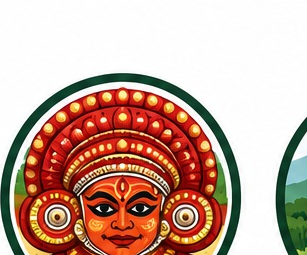
Beyond its natural beauty and industrial heritage, Kannur holds a profound place in Kerala's cultural consciousness. It is the heartland of Theyyam, an ancient, visually striking ritualistic dance-drama that blends indigenous religion, intricate makeup, and powerful storytelling. Historically, the district has been a critical hub for the global spice trade, drawing explorers, merchants, and colonial powers—including the Portuguese, Dutch, and British—to its shores. Today, Kannur balances its deep-rooted traditions with modern development, serving as a vital node for tourism, education, and commerce in northern Kerala.
HistoryOpen ↗
Kannur’s history is a tapestry of ancient maritime trade, indigenous kingdoms, and colonial resistance. Known as "Naura" in ancient Tamil literature and later as "Jurfattan" by Arab scholars like Ibn Battuta, the region has been an active participant in global trade for millennia, exporting spices, timber, and textiles to the Middle East, Rome, and beyond.
For centuries, the area was ruled by the Mooshika kings and later the Kolathiri Rajas, who were powerful regional sovereigns. Kannur is also notable for the Arakkal Kingdom, the only Muslim royal family in Kerala, which held significant naval influence over the Laccadive (Lakshadweep) islands and the northern Malabar coast.
The colonial era began in 1498 when Vasco da Gama arrived in Kerala. By 1505, the Portuguese, led by Dom Francisco de Almeida, built St. Angelo Fort along the Kannur coast. The fort later fell to the Dutch in 1663, and eventually to the British East India Company in 1790. During the late 18th century, Kannur witnessed fierce resistance against British rule, most notably led by Kerala Varma Pazhassi Raja in a series of guerrilla wars known as the Cotiote War.
Following India's independence in 1947, Kannur remained part of the Madras Presidency until the linguistic reorganization of states in 1956 formed Kerala. Kannur District was officially created on January 1, 1957. In modern history, Kannur has been a formidable center for political movements, particularly serving as a stronghold for left-wing and communist politics in India, playing a major role in agrarian and labor reforms.
GeographyOpen ↗
Kannur district lies on the Malabar Coast, bordered by Kasaragod district to the north, Kozhikode district to the south, and the Kodagu district of Karnataka to the east. The geography is broadly categorized into three distinct regions: the coastal lowlands, the rolling midlands, and the mountainous highlands.
The district is rich in water resources, intersected by a network of rivers. The Valapattanam River is the longest (110 km), followed by the Kuppam, Mahe, Anjarakandi, Thalassery, Ramapuram, and Perumba rivers. These rivers form vital estuaries, backwaters, and mangrove ecosystems. Natural resources include rich laterite soils in the midlands and dense tropical forests in the eastern belts, particularly around the Aralam Wildlife Sanctuary, which hosts a variety of endemic flora and fauna.
TopographyOpen ↗
The topography of Kannur rises steadily from the sea level in the west to the peaks of the Western Ghats in the east. * Highlands (Eastern Region): Characterized by rugged mountains, steep valleys, and dense forests. The highest point is Paithalmala, a hill station peaking at approximately 1,372 meters (4,501 feet) above sea level. * Midlands (Central Region): A beautiful, undulating landscape consisting of low laterite hills, deep valleys, and fertile river basins. This region is ideal for the cultivation of cash crops like rubber, cashew, and coconut. * Lowlands (Western Coastal Region): Comprises a narrow, flat coastal plain with sandy soil. It features several prominent beaches, including Payyambalam Beach and Muzhappilangad—India's longest drive-in beach.
Weather & climateOpen ↗
Kannur experiences a tropical monsoon climate (Köppen climate classification *Am*). The weather is generally hot and highly humid year-round, typical of the Kerala coast. * Temperatures: Average maximum temperatures range from 31°C to 34°C (88°F to 93°F), while minimums rarely drop below 23°C (73°F). April and May are the hottest months. * Rainfall: Kannur receives abundant rainfall, averaging over 3,300 mm (130 inches) annually. The bulk of this arrives during the Southwest Monsoon (June to September), with a secondary rainy season during the Northeast Monsoon (October to November). * Humidity: Consistently high, usually hovering between 70% and 90%. * Best Time to Visit: The cooler, drier months from October to February are ideal for tourism and experiencing the local Theyyam festivals.
PopulationOpen ↗
According to the 2011 Census of India, Kannur district has a population of 2,523,003, with an almost equal, slightly female-leaning gender ratio (1,068 females per 1,000 males), characteristic of Kerala's demographic profile. * Growth: The population growth rate has stabilized and is relatively low compared to national averages, reflecting high developmental indices. * Demographics: The district has a diverse ethnic and religious composition. Hinduism is the majority religion, followed by a substantial Muslim population and a Christian minority. * Language: Malayalam is the primary and official language. English is widely understood and spoken, especially in business, education, and government. * Education & Income: Kannur boasts a literacy rate of over 95%, one of the highest in India. A significant portion of household income is derived from remittances sent by the Malayali diaspora working in the Middle East.
GovernmentOpen ↗
Kannur District is administered by a District Collector (an IAS officer) who oversees revenue, law and order, and general administration. Local governance operates under the Panchayati Raj system, decentralizing power to local bodies. * Local Bodies: The district comprises the Kannur Municipal Corporation (the civic body governing Kannur city) alongside numerous municipalities (such as Thalassery, Payyanur, Mattannur, Taliparamba) and Grama Panchayats. * Legislative Representation: Kannur district sends 11 members to the Kerala Legislative Assembly (MLAs) from constituencies including Payyanur, Kalliasseri, Taliparamba, Irikkur, Azhikode, Kannur, Dharmadam, Thalassery, Kuthuparamba, Mattannur, and Peravoor. It also falls primarily under the Kannur and Vadakara Lok Sabha constituencies, sending representatives to the national Parliament. * Public Services: Law enforcement is handled by the Kerala Police, divided into Kannur City and Kannur Rural police districts.
EconomyOpen ↗
Kannur’s economy is a blend of agriculture, traditional industries, services, and significant foreign remittances. Historically an agrarian and industrial economy, the district is rapidly modernizing.
The presence of traditional industries (handloom textiles, beedi rolling) has long sustained the local workforce, but today, service sectors, retail, and tourism are major growth drivers. Foreign remittances, primarily from Kannur natives working in Gulf Cooperation Council (GCC) countries, heavily bolster the local economy, driving real estate, banking, and consumption. The opening of the Kannur International Airport in 2018 provided a massive boost to regional trade, export logistics, and the hospitality sector.
IndustriesOpen ↗
* Textiles and Handloom: Renowned for weaving high-quality cotton textiles, Kannur exports home furnishings and fabrics globally. * Tourism: An expanding sector capitalizing on beaches, historical forts, Ayurvedic retreats, and cultural tourism (Theyyam). * Wood and Plywood: Supported by the region's timber resources, numerous plywood factories operate in the midlands. * Ayurveda & Healthcare: Home to major Ayurvedic manufacturing units, research centers, and a growing medical tourism footprint. * Agriculture Processing: Coconut oil extraction, cashew processing, and spice packaging are widespread small-scale industries. * Construction & Real Estate: Fueled by NRI (Non-Resident Indian) investments, leading to a boom in residential and commercial infrastructure.
AgricultureOpen ↗
Agriculture forms the traditional backbone of Kannur’s rural economy. The fertile soil and abundant monsoon rains support a variety of crops. * Cash Crops: Coconut, rubber, cashew, areca nut, and spices (black pepper, cardamom, nutmeg) are cultivated extensively in the midland and highland regions. * Food Crops: Paddy (rice) and tapioca are the staple food crops, though land used for paddy cultivation has declined in favor of cash crops and real estate. * Fisheries: With a long coastline, fishing is a major livelihood. Key fishing harbors include Mappila Bay and Ayikkara, supplying both domestic markets and seafood export units. * Forestry: Rubber plantations and timber are significant contributors in the eastern hilly belts.
HousingOpen ↗
The housing market in Kannur reflects a striking mix of traditional aesthetics and modern affluence. * Traditional Homes: Older structures often feature classic Kerala architecture, including sloping tiled roofs, wooden courtyards (*Nalukettu*), and extensive verandas. * Modern Villas: Thanks to substantial Gulf remittances, the district features an incredibly high density of large, modern, multi-story single-family concrete homes. * Apartments and Condominiums: The cities of Kannur and Thalassery are seeing rapid vertical growth, with high-rise apartment complexes becoming popular for the urban middle class due to security, amenities, and changing family structures. * Affordable Housing: State government schemes (like the LIFE Mission) aim to provide affordable housing for lower-income groups in rural and semi-urban panchayats.
NeighborhoodsOpen ↗
* Kannur City: The administrative and commercial hub, featuring historical sites like St. Angelo Fort, Payyambalam Beach, and bustling markets. * Thalassery (Tellicherry): A coastal town famous for its colonial heritage, bakery industry, historical fort, and being a birthplace of Indian circus and cricket. * Payyanur: Located in the north, renowned for the traditional Khadi industry, beautiful backwaters, and the ancient Subramanya Swamy Temple. * Taliparamba: An important trading center for agricultural produce, famous for the Rajarajeshwara Temple. * Mattannur: A rapidly developing town due to the presence of the Kannur International Airport. * Iritty: Known as the "Macao of Kannur," a hilly commercial town crucial for the regional spice and rubber trade.
TransportationOpen ↗
* Air: Kannur International Airport (CNN), located in Mattannur, connects the district to major Indian cities and international destinations, particularly in the Middle East. * Rail: Well-connected by the Southern Railway network. Major railway stations include Kannur (CAN), Thalassery (TLY), and Payyanur (PAY), with daily trains to Mumbai, Delhi, Chennai, and Trivandrum. * Roads: National Highway 66 (NH 66) runs north-south through the district, connecting it to Mumbai and Kanyakumari. The state highway network seamlessly links the coastal towns to the hill stations. * Public Transit: A robust network of state-run KSRTC buses and private buses forms the backbone of local commuting. * Water Transport: Inland waterways and backwaters offer limited passenger ferry services, while minor ports handle fishing and small cargo.
InfrastructureOpen ↗
* Electricity: Power distribution is managed efficiently by the state-owned Kerala State Electricity Board (KSEB). * Water & Sewer: The Kerala Water Authority (KWA) manages piped drinking water supply. Urban areas rely on municipal sewer systems, while rural areas depend on private septic systems and wells. * Telecommunications: Excellent cellular coverage (4G and 5G) is provided by major national carriers (Jio, Airtel, BSNL, Vi). * Internet: High-speed broadband and fiber-optic internet penetration is high across both urban and rural areas, supported by the state’s K-FON initiative and private ISPs. * Healthcare: Kannur features robust medical infrastructure, including the Government Medical College in Pariyaram, the Malabar Cancer Center in Thalassery, and numerous advanced private hospitals.
EducationOpen ↗
Kannur is a major educational hub in northern Kerala, known for high literacy and prestigious institutions. * Universities: Kannur University, established in 1996, is headquartered here and affiliates numerous colleges across the region. * Engineering & Technology: Government College of Engineering, Kannur (GCEK) is one of the premier technical institutes in the state. * Medical & Ayurveda: Government Medical College (Pariyaram) and the Government Ayurveda College (Pariyaram) are leading healthcare education centers. * Arts & Science Colleges: Government Brennen College in Thalassery is one of the oldest and most historic institutions in Kerala, alongside Sree Narayana College and Payyanur College. * Schools: The district has an extensive network of public, aided, and private international schools following state, CBSE, and ICSE curricula. * Libraries: The public library movement is very strong in Kannur, with hundreds of village libraries (Vayanasalas) fostering community education and political discourse.
HealthcareOpen ↗
Kannur's healthcare infrastructure is robust, relying on a mix of government institutions, private hospitals, and traditional Ayurvedic centers.
Major Hospitals & Medical Colleges: * Government Medical College, Kannur (located in Pariyaram) – The premier public healthcare and educational institute in the district. * Kannur Medical College – Located in Anjarakandy, a major private medical college. * Aster MIMS Kannur – A prominent multi-specialty corporate hospital providing advanced tertiary care. * AKG Memorial Hospital – A major cooperative sector hospital in Kannur city. * Dhanalakshmi Hospital – One of the oldest and most trusted private multi-specialty hospitals in the region. * Sree Chand Hospital – A modern multi-specialty hospital in the district.
Traditional Medicine: Kannur is renowned for Ayurveda and Kalari chikitsa (orthopedic and neuromuscular treatments tied to the martial art of Kalarippayattu). Numerous Ayurvedic clinics and wellness centers operate throughout the district.
Emergency servicesOpen ↗
Kannur is served by standard state and national emergency services, coordinated by the district administration.
Primary Emergency Numbers: * National Emergency Number: 112 * Police: 100 * Fire & Rescue Services: 101 * Ambulance: 108
Local Infrastructure: * Police: The Kannur City Police and Kannur Rural Police manage law and order, with the Kannur Town Police Station acting as the central precinct. * Disaster Management: The District Disaster Management Authority (DDMA), headed by the District Collector, manages natural disasters, particularly monsoon flooding, coastal erosion, and landslides in the hilly areas.
BusinessesOpen ↗
Kannur, historically a major trading port, has an economy deeply rooted in traditional industries, agriculture, and increasingly, modern commerce.
Key Sectors & Industries: * Handloom and Textiles: Known as the "City of Looms and Lores," Kannur is famous for its high-quality handloom products. Cooperatives and state-run entities dominate this sector. * Plywood and Timber: Valapattanam is historically one of the largest wood and plywood industrial centers in Asia. * Agriculture: Cash crops like rubber, cashew, coconut, and pepper are economic mainstays in the rural parts of the district.
Business Districts: * Fort Road: The primary commercial high street in Kannur city, home to retail networks, banks, and shopping centers. * South Bazar and Thavakkara: Major commercial and transport hubs. * Capitol Mall and Kannur Mall: Prominent modern retail shopping centers.
Restaurants & foodOpen ↗
Kannur offers a rich culinary heritage, heavily influenced by Malabar culture, Arab trading history, and local coastal flavors.
Signature Dishes: * Thalassery Biryani: A legendary, mildly spiced biryani made with Jeerakasala (Kaima) rice instead of Basmati. * Kannur Cocktail: A vibrant, sweet local beverage made with papaya, milk, pomegranate, and nuts. * Snacks: Kalathappam, Kinnathappam, Unnakkaya, Arikkadukka (stuffed mussels), and Pazham Nirachathu.
Food Scene & Markets: * Seafood: Fresh catch from the Arabian Sea is heavily featured in local meals (e.g., Ayila, Mathi, and Karimeen). * Local Dining: Eateries like *Odhen's Hotel* are famous for traditional Kerala seafood meals. Nearby Thalassery is famous for its historical bakeries (like Mambally, the birthplace of the Indian bakery industry in the late 19th century). * Street Food: Stalls near Payyambalam Beach serve pickled fruits, spiced peanuts, and local iced treats.
TourismOpen ↗
Kannur boasts a blend of colonial heritage, pristine beaches, and unique cultural landmarks.
Top Attractions: * St. Angelo Fort (Kannur Fort): Built in 1505 by the Portuguese, offering panoramic views of the Arabian Sea and the Moppila Bay. * Muzhappilangad Drive-in Beach: Asia's longest drive-in beach, allowing visitors to drive vehicles directly along a 4 km stretch of sand. * Payyambalam Beach: A beautiful, well-maintained stretch of sand known for its sunset views and the adjacent gardens containing the resting places of several political leaders. * Arakkal Museum: Housed in the former palace of the Arakkal family—the only Muslim royal family in Kerala's history. * Kannur Lighthouse: A historic lighthouse offering sweeping views of the coastline. * Parassinikkadavu Snake Park: A popular conservation park dedicated to the preservation and study of snakes and other reptiles.
RecreationOpen ↗
From coastal relaxation to hill trekking, Kannur provides diverse recreational opportunities.
* Beach Activities: Swimming, paramotoring, and driving on the sands of Muzhappilangad Beach. * Trekking and Hill Stations: Paithalmala and Palakkayam Thattu offer excellent trekking trails, mist-covered hills, and panoramic views of the Western Ghats. * Boating: The Kavvayi Backwaters in the north of the district provide tranquil houseboating and kayaking experiences. * Amusement Parks: Vismaya Amusement Park, run by the Malabar Tourism Development Cooperative, is a major regional attraction with water rides and entertainment. * Surfing & Water Sports: Emerging surf schools and water sports are gaining traction along the district's extensive coastline.
Parks & natureOpen ↗
The geography of Kannur ranges from the coastal plains to the lush foothills of the Western Ghats.
Key Nature Reserves & Parks: * Aralam Wildlife Sanctuary: A 55 sq km sanctuary in the Western Ghats, home to elephants, leopards, deer, and diverse avian species. It features scenic spots like the Meenmutty Waterfalls. * Madayipara: A laterite plateau known as a biodiversity hotspot, famous for its spectacular seasonal blooms, especially after the monsoons, and home to rare butterfly and bird species. * Paithalmala: The highest geographic peak in Kannur, situated near the Kerala-Karnataka border, known for its dense Shola forests. * Ezhimala: A picturesque hillock near the coast that houses the Indian Naval Academy, blending rich flora with historical significance.
Rivers, lakes & waterwaysOpen ↗
Waterways are a defining feature of Kannur’s geography, supporting fishing, tourism, and historical trade.
Rivers: Kannur is drained by several rivers flowing from the Western Ghats into the Arabian Sea, including: * Valapattanam River: The longest river in the district, historically central to the timber trade. * Kuppam River, Anjarakandy River, and Mahe River.
Backwaters & Lakes: * Kavvayi Backwaters: A stunning, lesser-known backwater system in North Malabar formed by five rivers, dotted with small islands. * Moppila Bay: A natural harbor in Kannur city, historically a major port and now a bustling fishing harbor.
Waterfalls: * Alakapuri Waterfalls and Meenmutty Waterfalls (within Aralam) are popular nature retreats.
Arts & cultureOpen ↗
Dubbed the "Land of Looms and Lores," Kannur is the cultural heartland of North Malabar.
* Theyyam: The district is globally renowned for Theyyam, a vibrant, ritualistic trance-dance performed in local shrines (Kavus) from October to May. Performers don elaborate makeup and towering headdresses, embodying deities. * Kerala Folklore Academy: Headquartered in Chirakkal, Kannur, this state institution is dedicated to preserving and promoting Kerala's traditional art forms. * Martial Arts: Kalarippayattu, one of the oldest martial arts in the world, has deep roots here, with numerous *Kalaris* (training schools) operating in the district. * Music & Literature: Folk songs known as *Vadakkan Pattukal* (Ballads of North Malabar) celebrate local heroes and heroines like Aromal Chekavar and Unniyarcha.
ReligionOpen ↗
Kannur is characterized by a harmonious blend of Hinduism, Islam, and Christianity, each contributing deeply to the region's heritage.
Major Places of Worship: * Hinduism: The Parassinikkadavu Muthappan Temple is a unique shrine where the deity is offered toddy and fish, and Theyyam is performed year-round. Other major temples include the Rajarajeshwara Temple (Taliparamba) and the Kottiyoor Shiva Temples. * Islam: Islam has ancient roots here, tied to Arab traders. Prominent mosques include the Madayi Mosque (built in 1124 CE) and the historical Odathil Palli in nearby Thalassery. * Christianity: The Burnassery (Cantonment) area is home to historic churches such as the Holy Trinity Cathedral. The district saw significant Christian migration from Central Kerala in the 20th century, bringing agricultural development to the hilly eastern belts.
SportsOpen ↗
Kannur has a rich sporting culture, particularly in football, athletics, and basketball.
* Football: The sport enjoys massive popularity. Local sevens football tournaments are community events. The Jawahar Municipal Stadium in Kannur city hosts district and state-level matches. * Cricket: Nearby Thalassery is widely considered the birthplace of cricket in India, having hosted matches played by Arthur Wellesley in the 1790s. The Thalassery Municipal Ground continues this legacy. * Athletics & Basketball: Kannur has produced numerous national and international athletes. The Kerala Police basketball team, heavily rooted in Kannur, has historically been a powerhouse. * Sports Hubs: The Police Maidan and various municipal grounds serve as the daily training venues for amateur clubs and youths.
EventsOpen ↗
Kannur's event calendar is dominated by religious festivals, harvest celebrations, and cultural showcases.
* Theyyam Season: Spanning roughly from October to May, hundreds of local shrines host annual Theyyam festivals (Kaliyattam), which function as massive community gatherings. * Kottiyoor Vysakha Mahotsavam: A 28-day annual Hindu pilgrimage festival held in the deep forests of Kottiyoor during the monsoon. * State Festivals: Onam, Vishu, Eid-ul-Fitr, Eid-ul-Adha, and Christmas are celebrated district-wide with secular enthusiasm. * Kannur Beach Festival: Frequently organized at Payyambalam Beach, featuring local food stalls, cultural performances, and musical concerts. * Handloom Expos: Annual exhibitions are held to promote Kannur’s celebrated handloom and weaving cooperatives.
MediaOpen ↗
Kannur is well-integrated into Kerala's expansive media landscape.
Print: Major Malayalam dailies have regional printing presses and editions in Kannur, including: * *Malayala Manorama* * *Mathrubhumi* * *Deshabhimani* (which has a particularly strong base here) * *Madhyamam*
Radio & Broadcasting: * All India Radio (AIR): Operates a station in Kannur. * Private FM Stations: Club FM, Red FM, and Best FM provide local entertainment, music, and news.
Television & Online: Local cable networks operate local news channels. A thriving ecosystem of hyperlocal online news portals and social media pages keeps the community intensely connected to local politics and events.
Prominent personalitiesOpen ↗
Kannur has been the birthplace of many influential figures, particularly in politics, literature, and cinema.
* Pinarayi Vijayan – Current Chief Minister of Kerala and prominent political leader. * E. K. Nayanar – The longest-serving Chief Minister of Kerala, an iconic political figure. * K. Karunakaran – Former Chief Minister of Kerala and veteran political leader. * Captain Krishnan Nair – Business tycoon and founder of the luxury Leela Group of Hotels. * Vineeth Sreenivasan – Acclaimed playback singer, actor, and film director in Malayalam cinema. * Sukumaran – Late veteran Malayalam film actor. * C. K. Vineeth – Professional footballer who has represented the Indian national team and various ISL clubs. * M. V. Raghavan – Prominent politician and former state minister.
Notable companiesOpen ↗
While not a typical IT or corporate hub, Kannur is home to several major regional enterprises and cooperatives.
* Kerala Dinesh Beedi / Dinesh Foods: Originally one of India's largest worker cooperatives for beedi (tobacco) rolling, it has successfully diversified into Dinesh Foods and Dinesh Apparel in response to changing markets. * Western India Plywoods (WIP): Located in Valapattanam, it is one of the largest wood-based industrial complexes in Southeast Asia. * Kannur International Airport Limited (KIAL): The corporate entity managing Kannur International Airport, a major employer in the region. * Rubco (Kerala State Rubber Co-operative Limited): Headquartered in Kannur, manufacturing rubberized coir mattresses, furniture, and footwear. * Hanveev (Kerala State Handloom Development Corporation): Headquartered here, driving the district's extensive handloom and textile industry.
Sister citiesOpen ↗
_Data not readily available for this location._